Followers

Monday, 30 July 2018

The Birth of Indian Cinema

In the 21st century, one of the most flourishing cinema industry is in India. From the first silent movie Raja Harishchandra and the first talkie Alam Ara to the Bollywood industry,  Indian cinema has evolved to a greater extent and is the one of the most loved and appreciated cinema industry worldwide.
 However,the beginning of  cinema in India is still not known by many people and how cinema came to Mumbai (Bombay) is a lesser known event in the history of Indian cinema.There is a fascinating prequel to the Indian Cinema that goes back to the era of silent films in 1890 and the pioneers of Indian cinema were foreigners, the Lumiere brothers from France.
Image result for lumiere brothers 
On July 7, 1896 the Lumiere brothers showcased six films at the Watson hotel in Mumbai(then Bombay) and this event marked the advent of cinema in India as we know today. The six films screened that day were : Entry of Cinematographe, The Sea Bath, Arrival of a Train, A Demolition , Ladies and Soldiers on Wheels and Leaving the Factory. The ticket price of this screening was kept at Re. 1 and it was quoted by The Times of India ‘as a miracle of the century’.
Another screening by the Lumiere brothers was held at the Novelty Theatre in Bombay on 14th June, twenty-four films were screened at that day along with Thames at the Waterloo Bridge and A Stormy Sea.
After the film screening by Lumiere brothers in Bombay, cinema became a sensation in India. Later in Calcutta(Kolkata) a professor Stevenson staged a show at the Star Theatre.In the following years, the country had a wave of cinema coming. Using the camera used by Stevenson, Hiralal Sen, an Indian photographer made a motion picture of scenes from that show.
It is also interesting to know that the first ever film to be shot by an Indian was The Wrestlers made in 1898 by H.S. Bhatavdekar, which was depicting a wrestling match in Mumbai’s Hanging Garden. This was also the first documentary film.
Gradually, Indians understood all the technicalities related to the production and distribution of movies. The first full length Indian movie was made by Dadasaheb Phalke( the Father Of Indian Cinema) which was a silent film in 1913, called ‘Raja Harishchandra’. The film was a landmark in the Indian cinema and was a great commercial success too. It inspired many other films in the making.
In the year 1931, India got its first Talkie film Alam Ara, by Ardeshir Irani.
Today, the Indian Film Industry is one of the biggest and fastest growing industries with approx more than 2000 feature films being produced every year and Bollywood being the largest producer of films in India with almost 400 movies releasing every year.
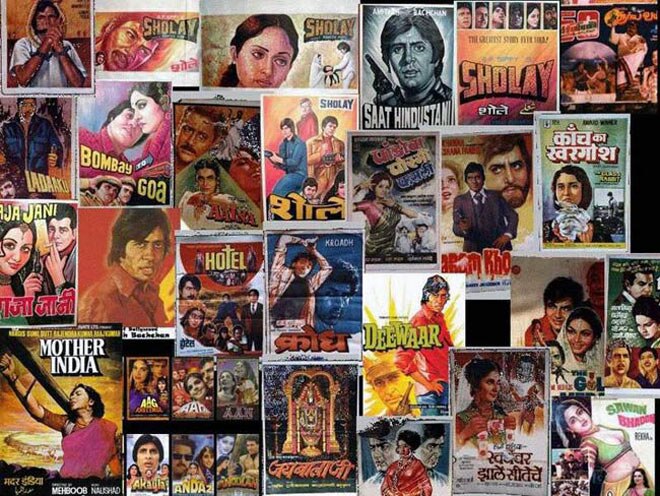
Image result for indian cinema collage
 Like the past, Indian cinema is still continuing to win more and more laurels and awards for the country and the credit for the establishment of Cinema in India goes to the Lumiere brothers, who brought a sensation in the people and ignited the spark towards motion pictures.

A look at the water crisis in India

Image result for water crisis in india

India is the seventh largest country in the world by geographical area and it is on number 2 in the world when it comes to population and rainfalls. There is a strange relationship between the other two.
We have so much rainfall but then why is India experiencing water shortage? Unfortunately, there is an ecological imbalance on the global scale. India is one of the eight countries which is seriously facing a sharp increase in water crisis that threatens humans,  a huge percentage of the world has no access to sanitation and clean water.
The average person only needs 20 or 30 liters of water, while every Indian consumes a bigger amount everyday for different purposes. Additionally, overpopulation and pollution have also been a cause of water poverty in India. 

 According to the report by NITI Aayog, India is facing the worst water crisis in its history, and 21 Indian cities will run out of groundwater by 2020,highlighting the need for “urgent and improved” management of water resources.

It also warned that the crisis are only going to get worse by 2030, the country’s water demand is projected to be twice the available supply, implying severe water scarcity for hundreds of millions of people.
Currently, 600 million Indians face high to extreme water stress and about 200,000 thousand people die every year due to inadequate access to safe water, said the NITI Aayog report on Composite Water Management Index (CWMI).
The report ranks Gujarat at the top in managing its water resources in the reference year (2016-17) followed by Madhya Pradesh, Andhra Pradesh, Karnataka and Maharashtra.
The worst states include Jharkhand, Haryana, Uttar Pradesh and Bihar.
According to India’s official Ground Water Resources Assessment, more than one-sixth of the country’s groundwater supply is currently overused, which is forcing cities to go for temporary measures like water imports which has economic implications. 
According to the World Bank’s study, water scarcity can affect long-term economic growth prospects. Water scarcity will cost India 6 per cent of its GDP if the country continues to mismanage water resources by 2050. The major impact will be on health, agriculture, income and property. 
Five of the cities likely to face severe water shortage in the next few decades are in India.They are: Delhi, Kolkata, Bangalore, Chennai, and Hyderabad in the order of current population.
The current total population of these five cities comes to around 67.5 million. By 2050, the region colored blue will have around 20 per cent more water. India, too, might have more water but urbanization will increase the population in Indian cities, thereby causing a situation called ‘absolute water scarcity’.
So, is this the right time to say that a country with a number of water resources, rivers, lakes and seas is going through a crisis of clean and potable water? Although, the monsoon season has hit various parts of India and this is the time when the government and the people should really look forward to the ways and methods of utilizing the rainwater which can make up for the wastage of water up to some extent.

Effective utilization of water resources is the only way we can avoid a disaster in the making. Performance around groundwater augmentation can significantly improve with the strengthening of groundwater regulations and strict implementation on the ground.
Steps like the improvement of monitoring network and continuous monitoring of groundwater level and groundwater quality, strict implementation of rainwater harvesting and continuous operation and maintenance of the same will also help states manage their groundwater better.

Some researchers have suggested that water conservation efforts should be primarily directed at farmers, in light of the fact that crop irrigation accounts for 70% of the world’s fresh water use.
As it can clearly be seen that the only way to tackle with this crisis is to ensure the effective utilization and conservation of water. And there are various methods known to us which we can apply even in our household applications, so as to ensure minimum wastage and conservation of water.
→ Install Water-Saving Showerheads, Shower Timers, and Low-Flow Faucet Aerators 
→Cover Swimming Pools to Reduce Evaporation
→reuse waste water wherever possible.
→water your lawn only when it needs.

→use water efficient outlets in your home.

Calm~A~Sutra

Human beings have the ability to comprehend any situation and give a reaction as per the requirement. However, the power of understanding and reacting is subjective to different people. Some may react aggressively and some may stay calm, all reactions are a result of the mechanism of the human brain which gets triggered as soon as anything happens which is not as per his expectations or against his beliefs.
Sometimes, people get so much hyper that their reactions lead to an argument and negative emotions overpower them.
And these negative emotions ultimately boil down to anger of some kind, either inwardly expressed, in that case the anger makes you feel sick, or outwardly expressed, so that it makes others feel angry and hostile.
Arguments and anger bring out the worst from the minds as well as the mouth of people. Many times, they spring from the pettiest of discussions too. Arguments are just discussion of issues between minds who disagree. When people try to defend their beliefs and disprove of others point of views, arguments arise and tend to escalate into a full blown fight which can totally threaten the relationship between two person.
There are various ways by which a person can choose to be wise and stay calm at the time of heated arguments. The best methods are listed below :
1.Always remember that your point of view is not the only one that everyone should have. Respect others opinion and even if they are different from yours don’t try to manipulate them.
2.  THINK before you SPEAK, often a simple discussion gets heated because people forget their limits and speak whatever comes in their mind. Cuss words, sledging and other such harmful words should be avoided as much as possible.
3. Take a step back from situation, before entering into any argument, step back and think is it worth the energy and time you are going to waste on it. If the answer you get is no, then step back and move away from the situation.
4. Don’t drag others into the argument, even if you are feeling helpless and want someone to support in the fight, don’t force others to take sides unless they really support your views.
5. Try to not raise your voice even if you are frustrated. This will make your opponent think that you are ready for a verbal battle and he will also respond in that same volume
level.
6. Remember that your dignity is only in your hands. If you allow others to overpower you by losing your temper, then you are losing every bit of your self esteem because of others.
7.  Even after trying all the methods, you are unable to avoid such arguments, just take some deep breaths and move away. This is the best you can do to remain calm and composed at the time of arguments.

Disability does not mean Inability

It is said that "No eye has seen,no ear has heard and no mind has imagined what God has prepared for those who love him." No mat...